In today’s evolving world of work, people have become every organization’s most critical competitive advantage.
As hybrid work, shifting expectations, and the demand for purpose reshape the talent landscape, one question stands out: “Why should someone choose to work for us—and stay?”
The answer lies in your Employee Value Proposition (EVP)—your unique set of promises, benefits, values, and experiences that you authentically offer and consistently deliver to current and potential employees.
A strong EVP does more than attract talent—it drives engagement and business outcomes. Yet, while nearly half of organizations have successfully cascaded their EVPs to their teams—a slight improvement from last year’s 45%—4 out of 10 are still stuck in the early stages. This gap presents both a challenge and an opportunity: companies that effectively activate and communicate their EVP are better positioned to compete for and retain top talent.
In short, your EVP is more than a message—it’s a strategic promise that shapes how your organization engages its people and differentiates itself in the talent market.
So how do you get started? Here are 6 key steps:
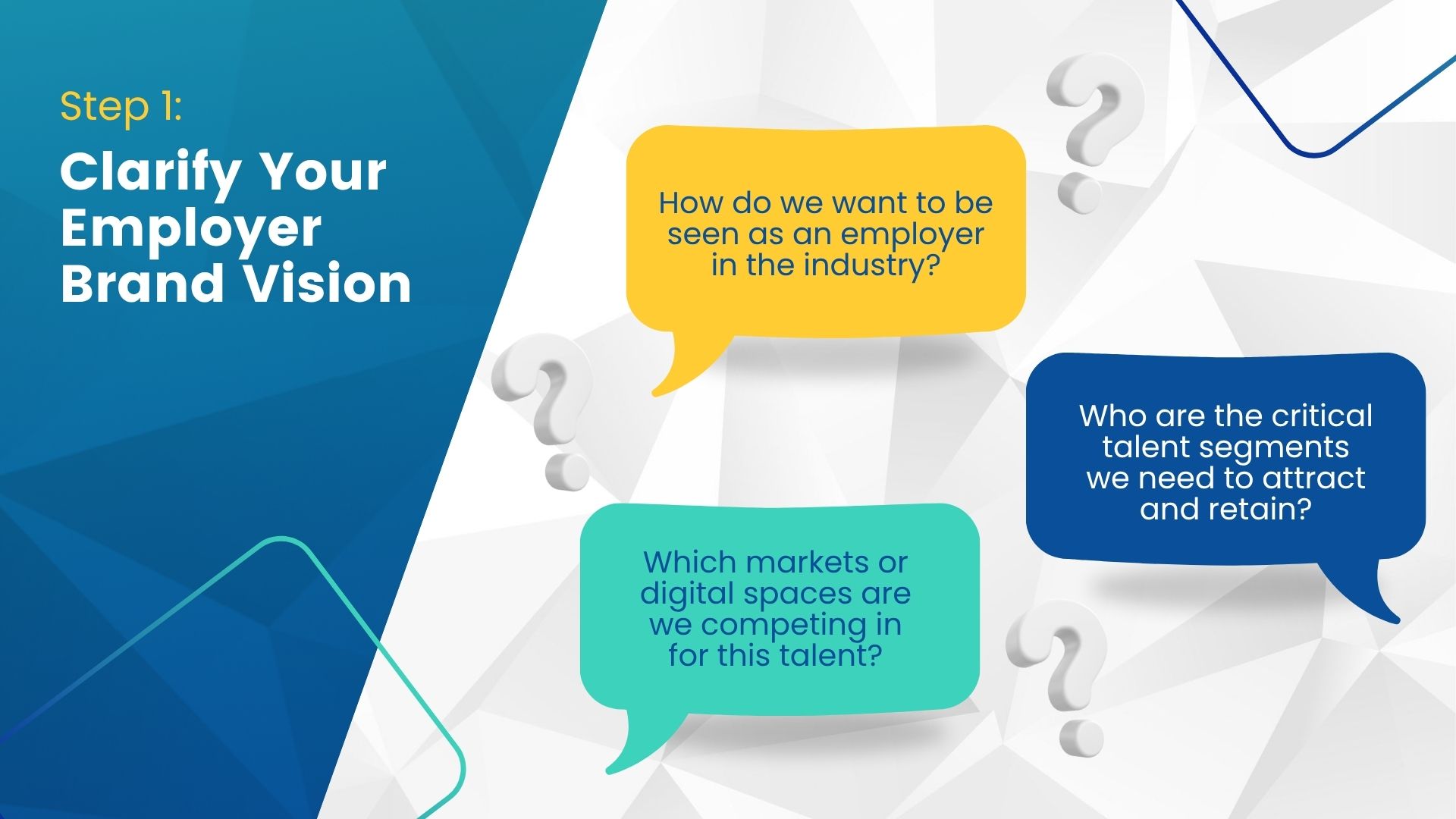
Step 1: Clarify Your Employer Brand Vision
Before developing your EVP, you need to define your employer brand vision—a long-term perspective of how your organization should be perceived by talent. This sets the foundation for all EVP decisions.
Ask yourself:
How do we want to be seen as an employer in the industry?
Who are the critical talent segments we need to attract and retain?
Which markets or digital spaces are we competing in for this talent?
These answers help you define the strategic direction of your employer brand, aligning both leadership and HR stakeholders from day one.
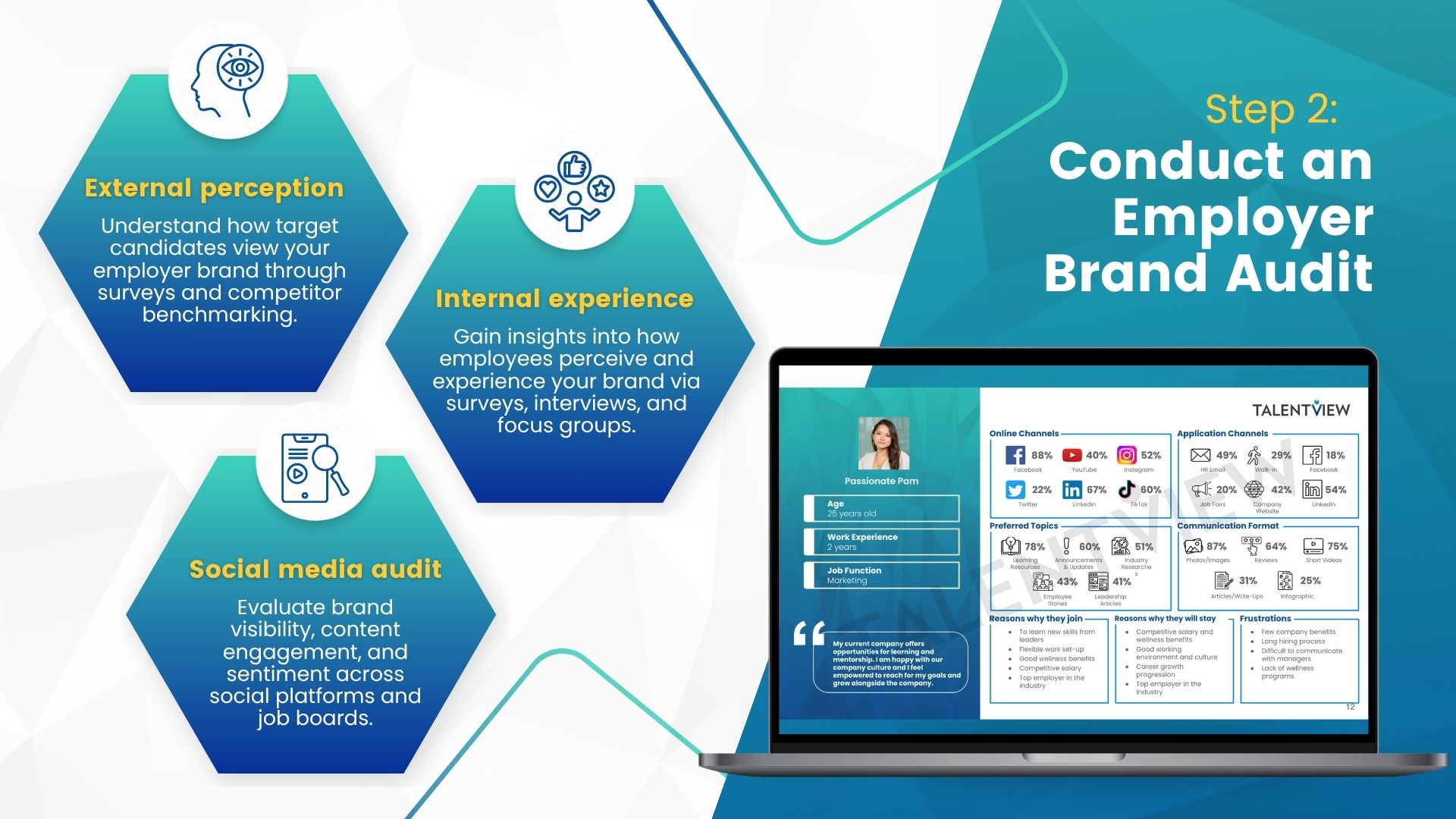
Step 2: Conduct an Employer Brand Audit
Today, 65% of talent feel that their current organization fulfills its EVP promises—but that’s only part of the story. It’s not enough to define what we want to offer or how we wish to be perceived. To truly align with evolving employee needs—which often vary across functions—we must start by understanding how we are currently perceived.
That’s why it’s critical to conduct a comprehensive employer brand audit, both internally and externally, to assess performance, uncover gaps, and ensure your EVP resonates with the people you want to attract and retain.
An effective audit includes:
External perception – Understand how target candidates view your employer brand through surveys and competitor benchmarking
Internal experience – Gain insights into how employees perceive and experience your brand via surveys, interviews, and focus groups
Social media audit – Evaluate brand visibility, content engagement, and sentiment across social platforms and job boards
These insights reveal gaps between your employer brand vision and how it's actually perceived—providing a clear roadmap to align your brand with what resonates most with both internal and external talent, while identifying opportunities to boost brand awareness.
Step 3: Identify Your Core EVP Attributes
From your audit, patterns will emerge around what your people value and what sets you apart. Your next step is to define the key pillars of your EVP—the themes that underpin your promise to talent.
The goal is to align talent preferences with what your organization genuinely offers—grounded in real employee experiences and data—ensuring that what attracts talent also reflects the reality they encounter. This fosters trust, satisfaction, and retention.
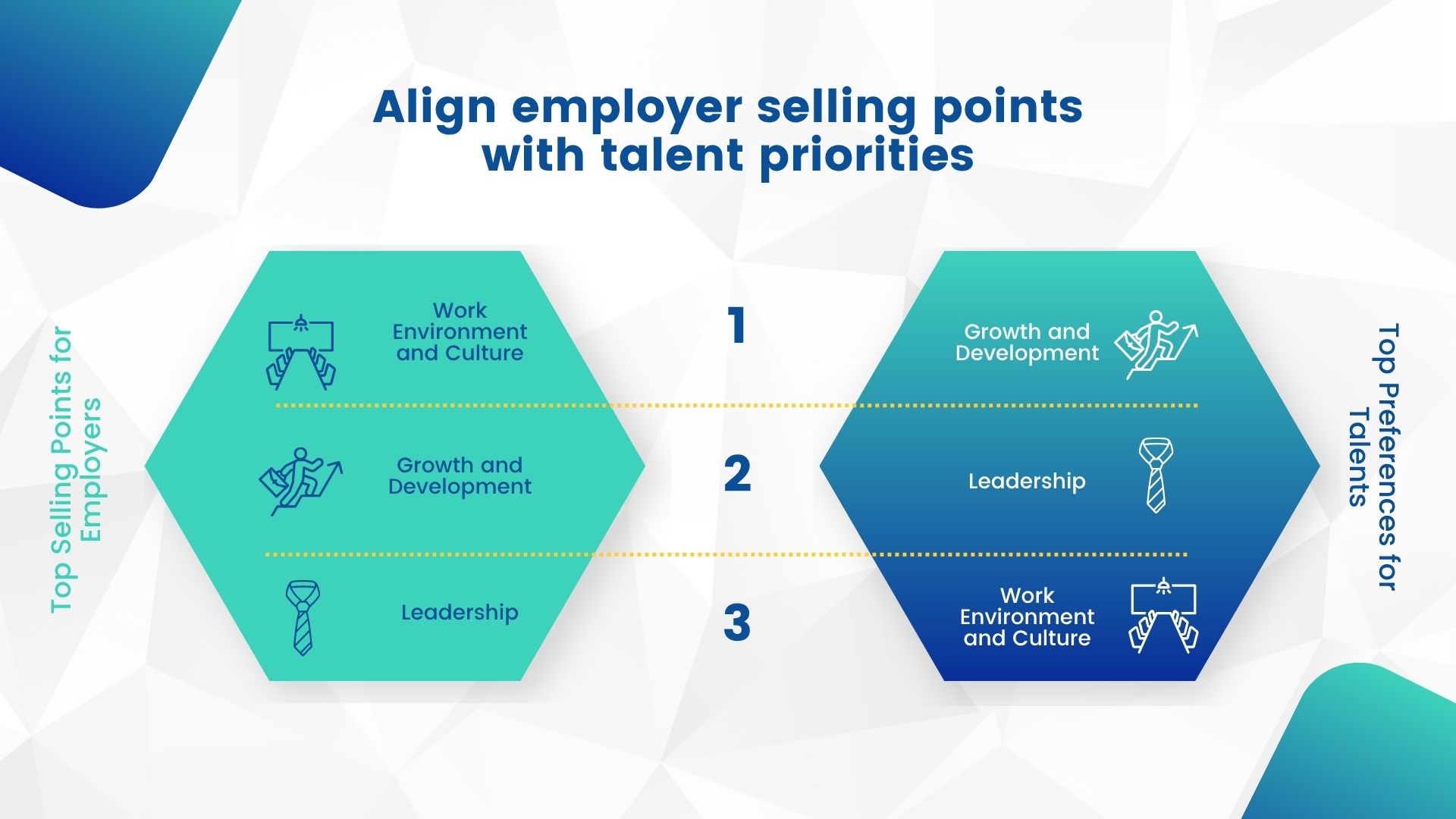
Here are the top attributes companies typically promote—compared to what talent actually looks for in an employer:
Growth and Development – Having collaborative processes that foster career advancement through skills assessment, learning, and development programs.
Work Environment – Having a work environment that values your skills and expertise, fosters a positive workplace culture, and provides a conducive workspace
Leadership – Being part of an organization that has competent, strategic, and flexible leaders who guide the company's performance and sustainability.
These elements can make or break the employee experience.
Step 4: Craft a Clear and Compelling EVP Narrative
Once your EVP pillars are defined, bring them to life through a strategic, unified narrative that speaks directly to your target talent segments. This narrative should reflect your culture, values, and employer brand personality—using a tone that feels true to your organization.
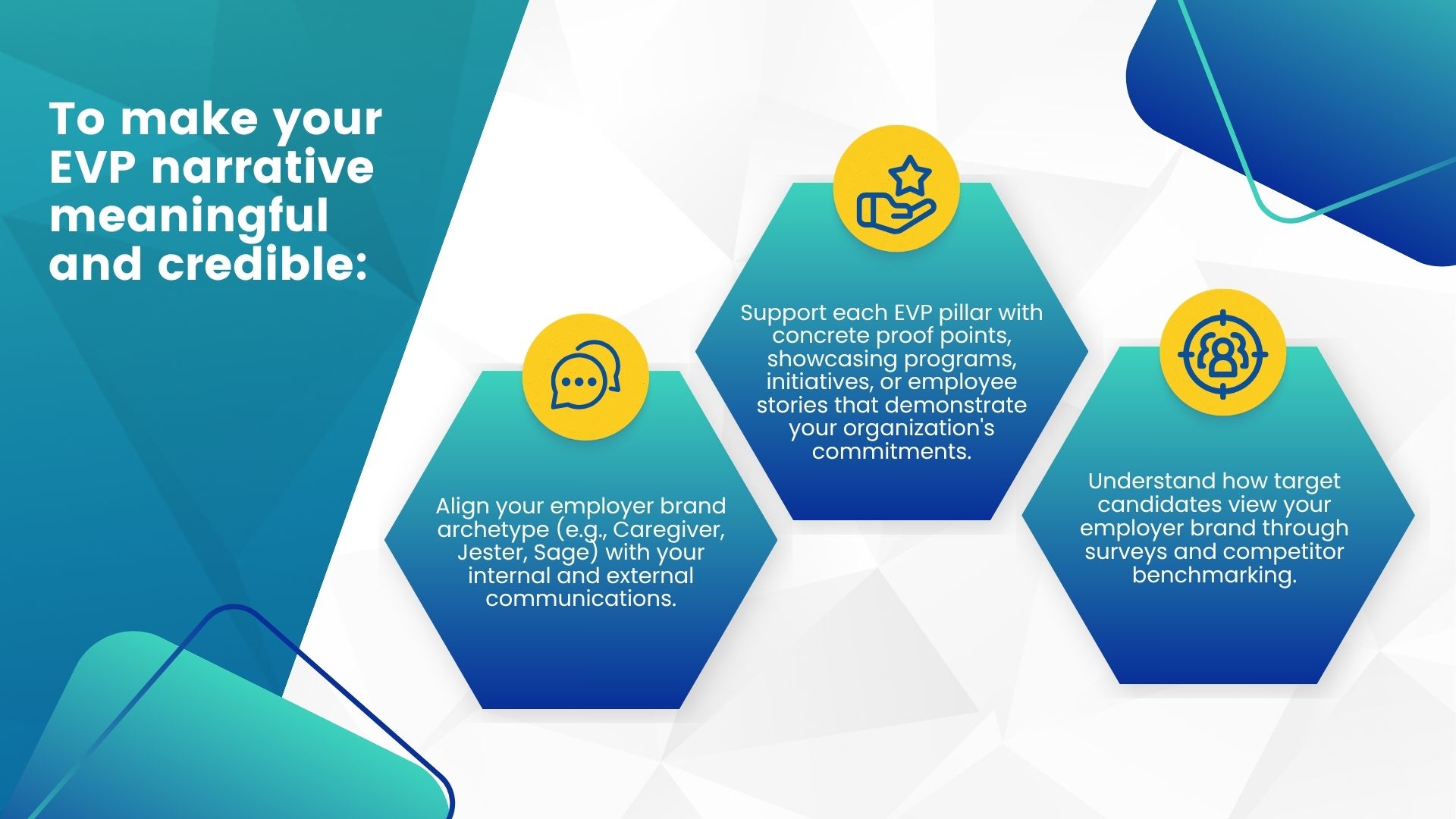
To make your EVP narrative meaningful and credible:
Use an employer brand archetype or tone of voice that mirrors your internal and external communications—like being caring and nurturing like a Caregiver, fun and lighthearted like a Jester, or knowledgeable and analytical like a Sage
Back each EVP pillar with proof points—highlight programs, initiatives, or employee stories that show how your organization lives out its promises
Localize the narrative across regions or business units to reflect specific roles, markets, or cultural contexts
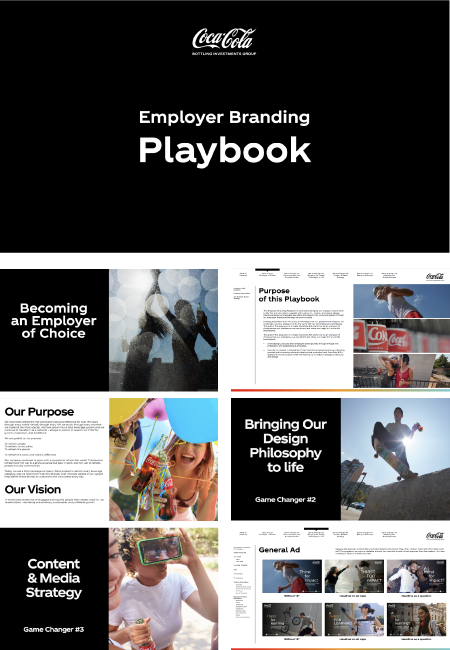
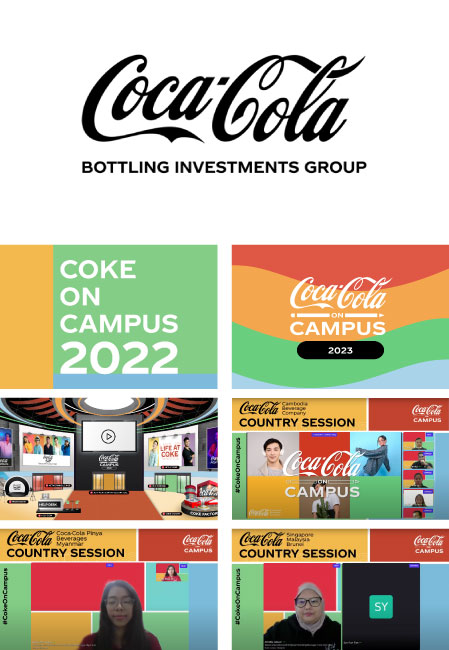
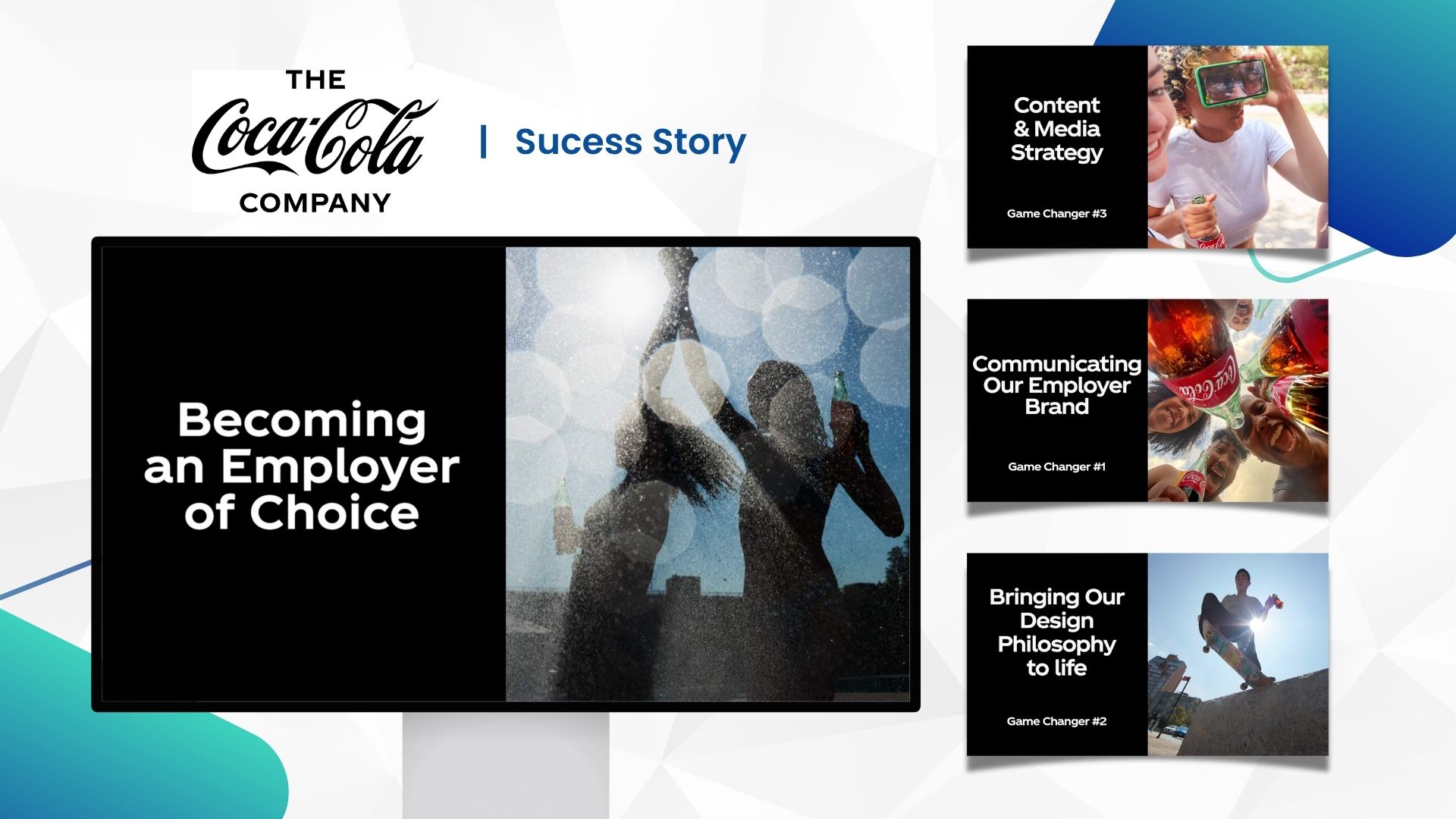
A strong example of this in action is Coca-Cola Bottling Investments Group, which partnered with TalentView to create a global EVP playbook. This enabled consistent branding across 15 markets, while allowing flexibility to localize tone and content for each region’s unique talent landscape.
Step 5: Activate Your EVPs Across All Channels
With your narrative in place, it's time to embed your EVP into key candidate and employee touchpoints. This ensures consistency, clarity, and authenticity throughout the employee lifecycle.
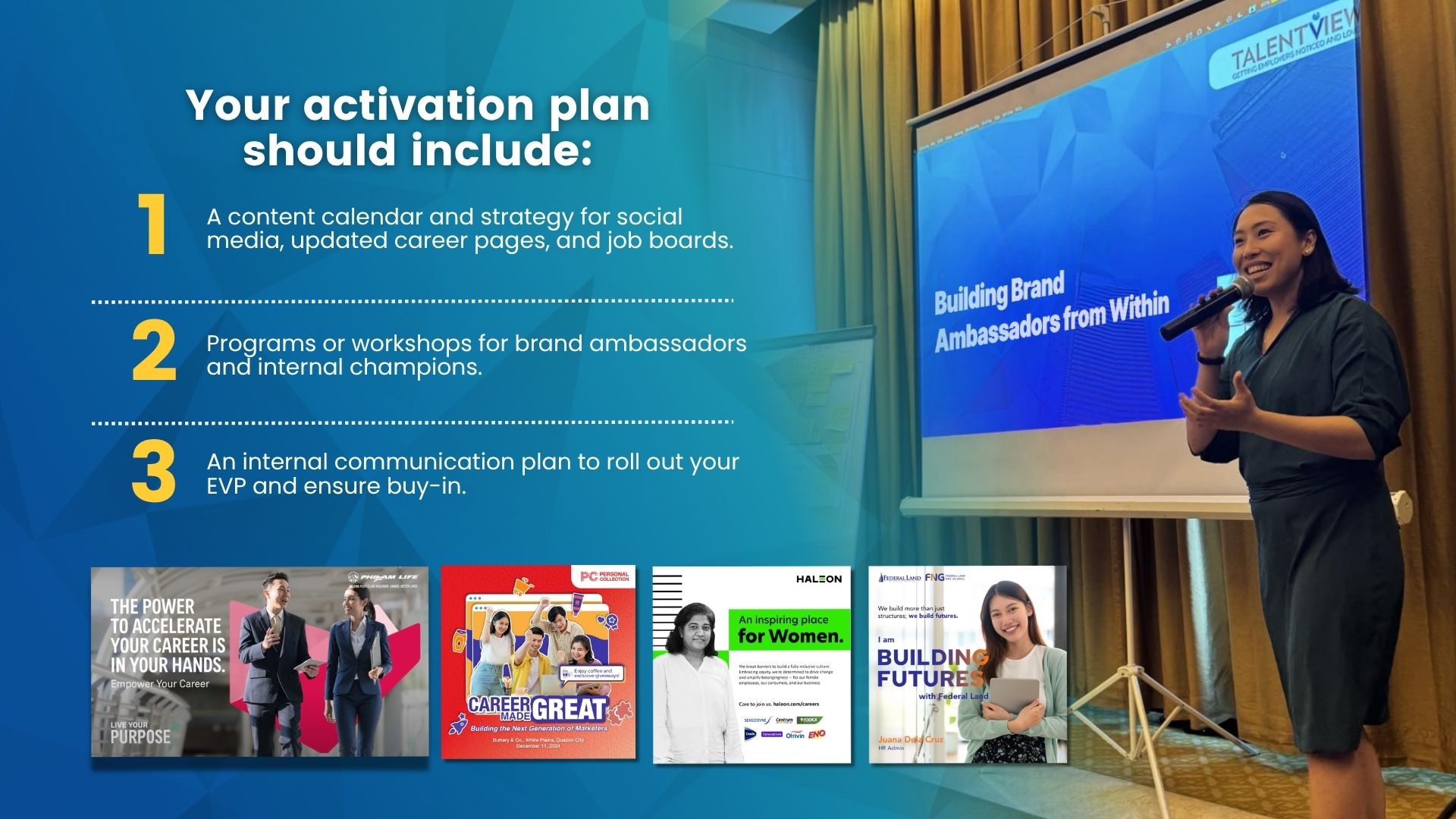
Your activation plan should include:
A content calendar and strategy for social media, updated career pages, and job boards
Programs or workshops for brand ambassadors and internal champions
An internal communication plan to roll out your EVP and ensure buy-in
This turns your EVP from a strategy on paper into a lived experience. Communicate it internally to align and engage your people, and externally to show candidates why they should build their careers with you.
Step 6: Measure, Optimize, and Evolve
Regularly reviewing your EVP is essential to stay competitive in today’s dynamic talent market. Your EVP isn’t static—as your organization and workforce evolve, so should your value proposition.
Make it a regular practice to:
Monitor employee and candidate sentiment —Identify and address key pain points to enhance experience and trust
Track content performance and employer brand engagement —Measure awareness, engagement, and conversion to refine your messaging
Revisit your EVPs —Ensure alignment with evolving talent expectations and business goals; reassess at least every 3 years
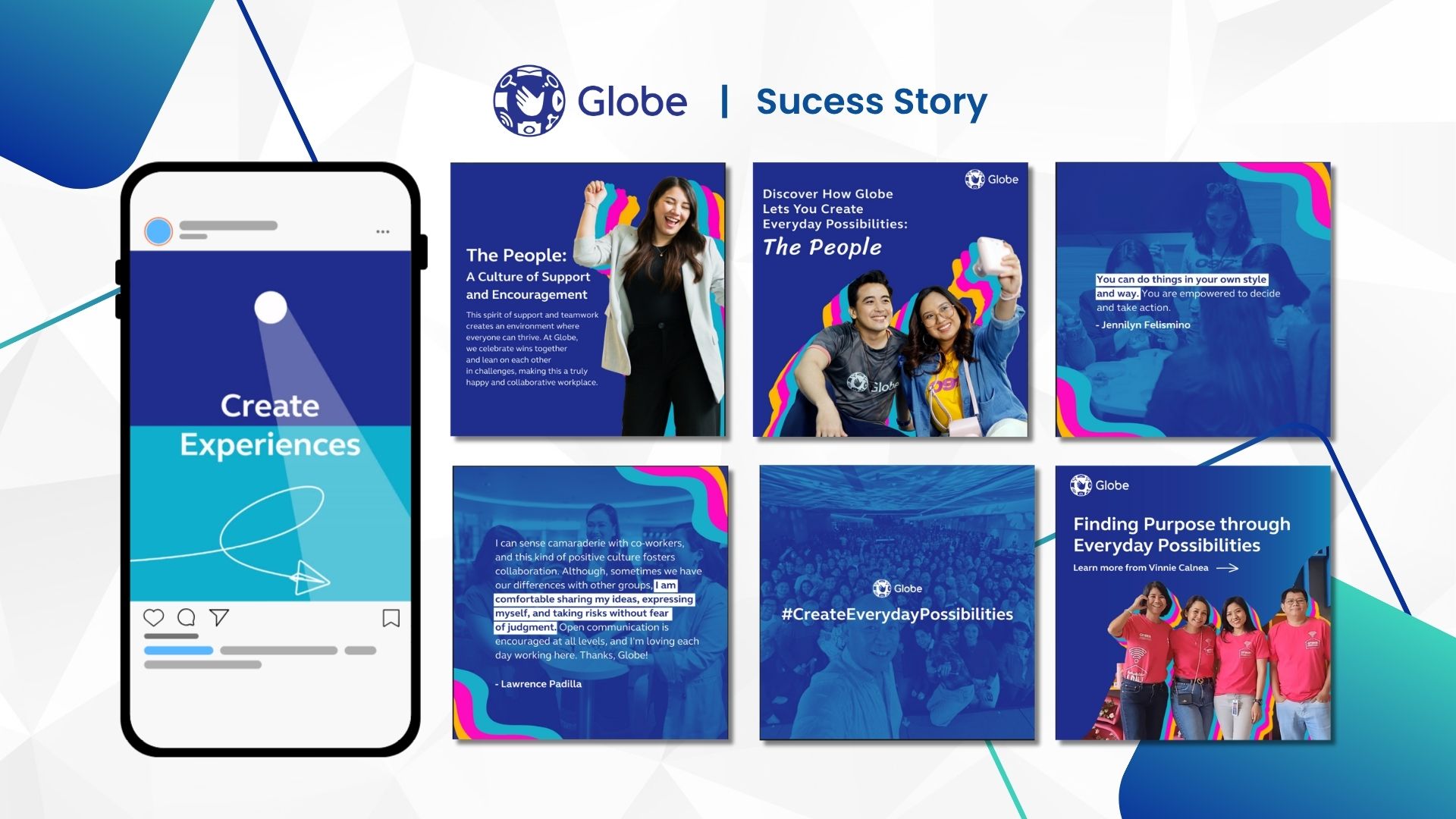
Organizations like Globe Telecom have used employer brand audits to reshape their EVP and better connect with younger talent segments through social media activations.
From Strategy to Impact: Your EVP Journey Starts Now
Building an Employee Value Proposition (EVP) is not merely a branding exercise; it signifies a dedicated leadership commitment to fostering a positive culture and promoting employee growth. When executed effectively, an EVP becomes a strategic asset that drives business outcomes by attracting and retaining individuals who are not only skilled but also aligned with the company's mission and vision.
Key Takeaways:
A strategic asset, not just branding: Building a strong EVP requires commitment from leadership and alignment with organizational culture and goals
Data-driven development: Regular audits and feedback are essential to ensure an EVP remains relevant and effective in attracting and retaining top talent
Clear communication is key: A well-defined and compelling EVP narrative must be consistently communicated across all channels to reach and resonate with the target audience
An ongoing journey: EVPs should evolve with the changing needs of the organization and the talent landscape, requiring continuous measurement, optimization, and adaptation
Ready to get started?
📩 Book a complimentary strategy session with us to learn how TalentView can support your EVP strategy.
Download the
Modern Workforce Report 2025
How do we build real connection in an increasingly digital world?
The Modern Workforce Report 2025 brings fresh insights from the people shaping your organizations.
With this year’s theme, “Building Meaningful Connections through Digital Innovation and Authenticity,” we uncover insights directly from professionals across the ASEAN region, highlighting what they can expect from leadership, culture, and tech in the modern workplace.
Discover the trends that matter and the actions that count.